Design with Memory |
|
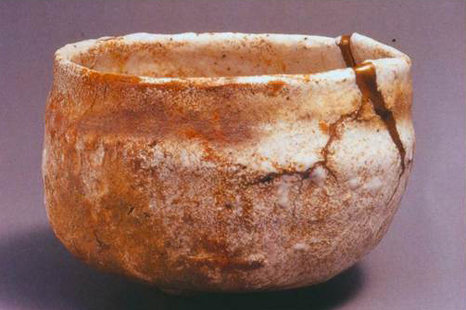
This is a picture of one of the oldest and most honored tea cups in Japan. That it was broken and repaired has only added to its value. We can see from this that the memory of something - its material and use - can have a powerful impact on its value. Perhaps this offers a whole new way to look at design with recycled and re-used and sustainable materials.
In conjunction with the Design Competition I had traveled to the Los Angeles Eco Expo in May 1998 and it was there I met a journalist from Japan named Hiroyuki Kushida. Together with Scott Kajiya and Teruo Kurosaki, the founder of IDEE Shop in Tokyo, they had created something called the Whole Earth Project, whose goal it was to look for what had happened to the creative spirits that had been unleashed in the 1960's - where were those people and ideas being expressed today? The group was very excited about the Competition and Kushida came to Seattle to learn more. From there we all worked together to create the first exhibit of commercially viable, sustainably designed products at IDEE, in Tokyo, which happened in Feb., of 1999. (See Below)
While attending the exhibit in Tokyo, I asked one of our Jurors, Wendy Brawer, who should I meet while here? She suggested Fumi Masuda, of openhouse who was a fellow member of O2. We had a series of great conversations, and one of the first things I learned was that the phrase "sustainable design" does not translate well into Japanese. Sustain is a musical term for them. If you actually translate what we mean by sustaianable design from Japanese to english, you get the phrase "Design with Memory"! That phrase was like a light going off, it worked well in both languages, and it seemed to lead to a better understanding of how this new era of design might evolve. We decided to use the phrase as a theme for the upcoming 5th round of the Competition and with the sponsorship of the Japanese Ministry of Trade and Economic Development, it became the theme of a series of Exhibits and educational lectures beginning with the the Design Resource Core in Tsubame Sanjo in November 1999, OZONE Design Center in Tokyo in January 2000, and in Nopporo, near Sapporro in April 2000. See the Exhibits Here
The core criteria for designer's submissions remained the same:
I hope these illustrations of Designing with Memory will be useful in your work in developing sustainable products and fostering the development of the sustainable future economy we are working to help evolve. We need to remember to think about where materials come from, how we use them in the present, and where they will go next.
Tom Johnson, Seattle, June 2015
In conjunction with the Design Competition I had traveled to the Los Angeles Eco Expo in May 1998 and it was there I met a journalist from Japan named Hiroyuki Kushida. Together with Scott Kajiya and Teruo Kurosaki, the founder of IDEE Shop in Tokyo, they had created something called the Whole Earth Project, whose goal it was to look for what had happened to the creative spirits that had been unleashed in the 1960's - where were those people and ideas being expressed today? The group was very excited about the Competition and Kushida came to Seattle to learn more. From there we all worked together to create the first exhibit of commercially viable, sustainably designed products at IDEE, in Tokyo, which happened in Feb., of 1999. (See Below)
While attending the exhibit in Tokyo, I asked one of our Jurors, Wendy Brawer, who should I meet while here? She suggested Fumi Masuda, of openhouse who was a fellow member of O2. We had a series of great conversations, and one of the first things I learned was that the phrase "sustainable design" does not translate well into Japanese. Sustain is a musical term for them. If you actually translate what we mean by sustaianable design from Japanese to english, you get the phrase "Design with Memory"! That phrase was like a light going off, it worked well in both languages, and it seemed to lead to a better understanding of how this new era of design might evolve. We decided to use the phrase as a theme for the upcoming 5th round of the Competition and with the sponsorship of the Japanese Ministry of Trade and Economic Development, it became the theme of a series of Exhibits and educational lectures beginning with the the Design Resource Core in Tsubame Sanjo in November 1999, OZONE Design Center in Tokyo in January 2000, and in Nopporo, near Sapporro in April 2000. See the Exhibits Here
The core criteria for designer's submissions remained the same:
- Contain a high degree of post-consumer recycled content or sustainably harvested material
- Demonstrate the ability to add value to the recycled or sustainable material and to increase its usage
- Be designed for future re-use or recyclability
- Be suitable for commercial production
I hope these illustrations of Designing with Memory will be useful in your work in developing sustainable products and fostering the development of the sustainable future economy we are working to help evolve. We need to remember to think about where materials come from, how we use them in the present, and where they will go next.
Tom Johnson, Seattle, June 2015
DESIGN WITH THE MEMORY OF THE USER |
With these designs the idea in the users mind is part of the product.
|
|
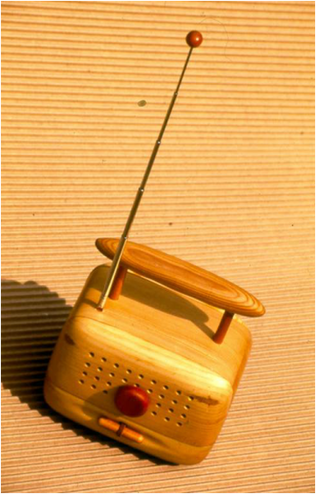
ARUNA ARUTALA RADIO
Singgh Kartono By avoiding to put any type of information on this radio the user must discover and then remember how to use it. The result is that the owner develops an attachment to the product. This attachment will cause the owner to keep the radio and to resist partaking in the current marketplace where new products supersede the old ones every few months. The goal is to make the product a permanent possession of the owner, thus reducing future consumption of materials. The radio is also made with used pallet wood from the local airstrip in Mr Kartono’s village in Indonesia. |
|
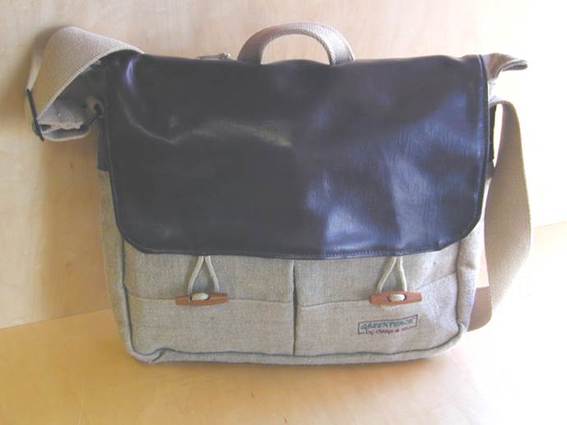
GREEN PEACE ACTIVIST BAG
Julie Lewis, DeepEco This company, DeepEco, tried to address an environmental problem with each product. This hemp bag uses a material called “Tree Tap” which is made from natural latex from wild rubber trees which grow in the Amazon River basin. The latex is harvested by native “tappers” and it is then coated on used sugar sacks and then cured by smoke. The idea is that by making the trees worth more standing than cut down to clear areas for agriculture that employment for the local tribes will be enhanced and the forest preserved. The product makes you a participant in this effort, and is itself 100% compostable, so it will be available to nourish life in the future. |
DESIGN WITH THE MEMORY OF THE MATERIALS |
These designs add value to the product by expressing the quality of the materials used.
|
|
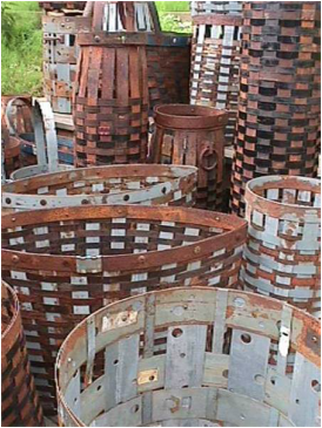
METAL WOVEN BASKETS
Arunas Oslapas These baskets are made of used industrial strapping taking full advantage of the colors that age and use has brought to the material. |
|
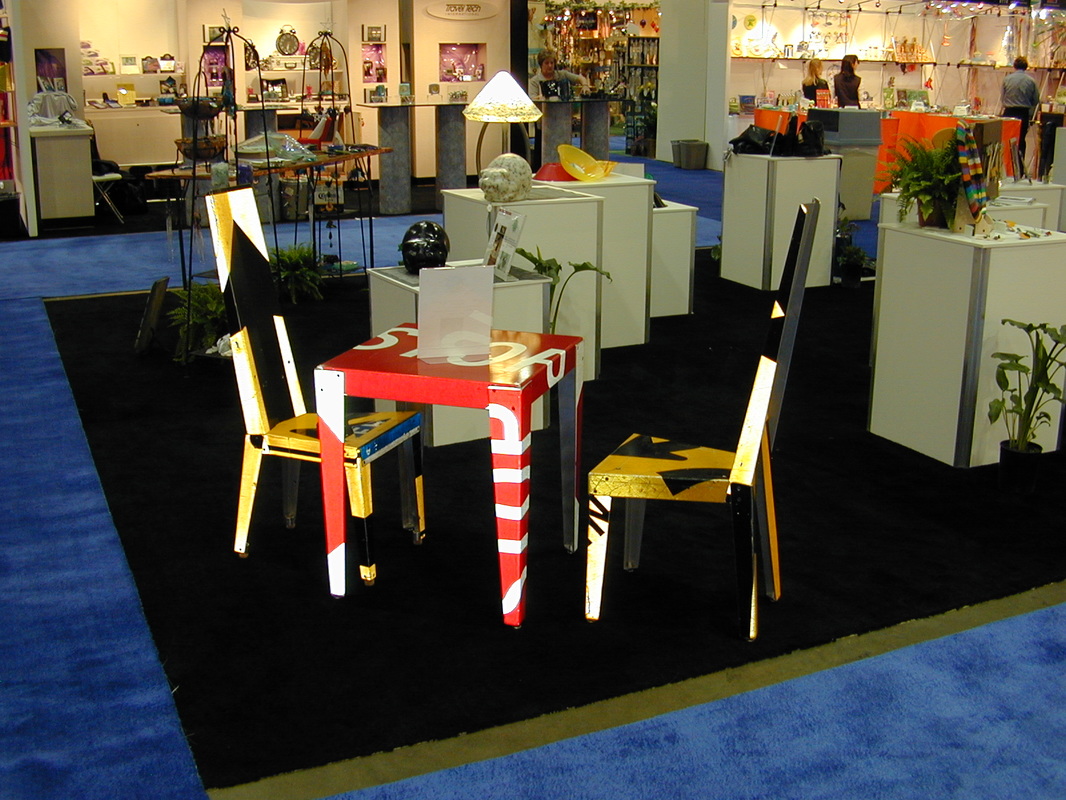
YIELD CHAIR AND TABLE
Boris Bally This furniture is made by folding used highway signs taking full advantage of the colors and graphics of the original sign. |
DESIGN WITH THE MEMORY OF THE PRODUCT
|
With the goal of creating a cycle of material and product that can be continued into the future.
|
|
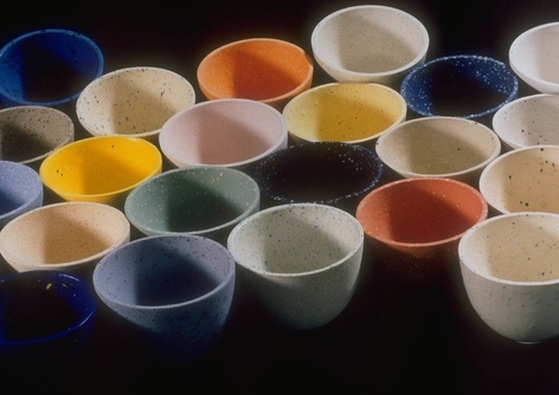
CERAMIC CUPS
Annelies de Leede Prototype from Holland uses post-industrial glazed ceramic scraps to form colorful decoration in new pottery bowls. |
|
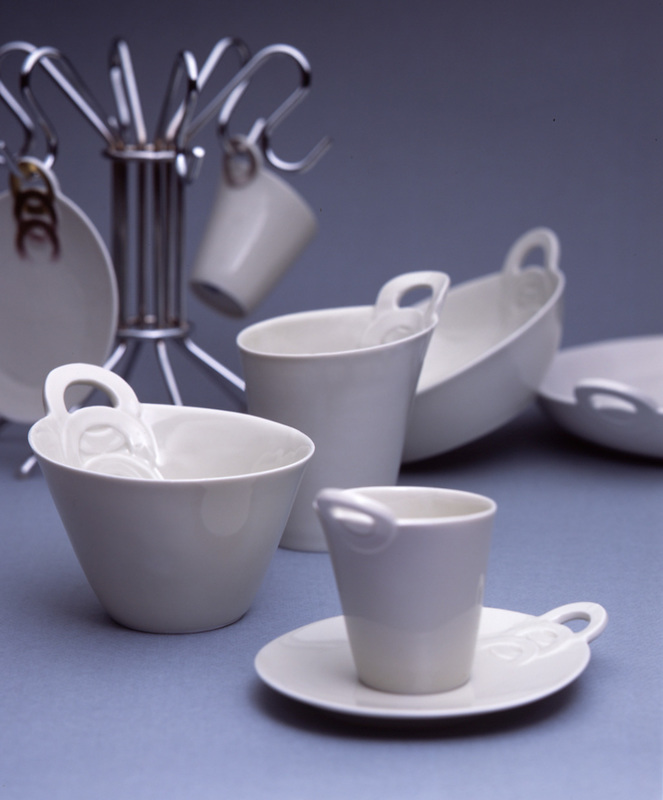
"RONDE" CHAINED RINGS
Arita Eco Porcelainware Porcelain ware from recycled porcelain. See how the traditional design pattern flows into the new product design. |
DESIGN WITH THE MEMORY OF NATURE |
These are products which remind us about our relationship to nature and are some of the most interesting we have seen in the Competition.
|
|
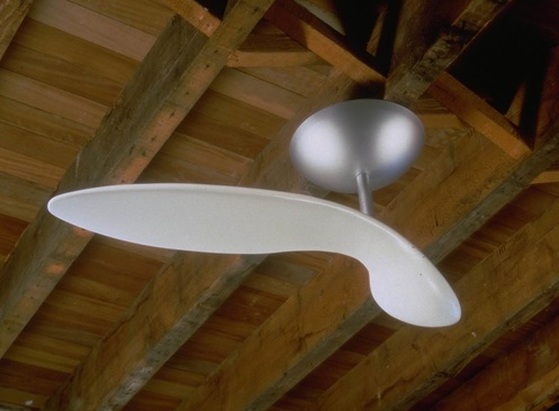
SYCAMORE FAN
Danny Glasser, Michael Hort, Ben Shepherd, Quisinh Tran The seeds of the sycamore tree spin as they fall to earth. The designers recognized that if they held the shape of the seed in one position and spun it this would create a breeze. This is an example of directly learning form nature. The fan blade is made from rotationally molded post-consumer recycled polypropylene. This product is also closely linked to the approach of Designing with the memory of the User |
|
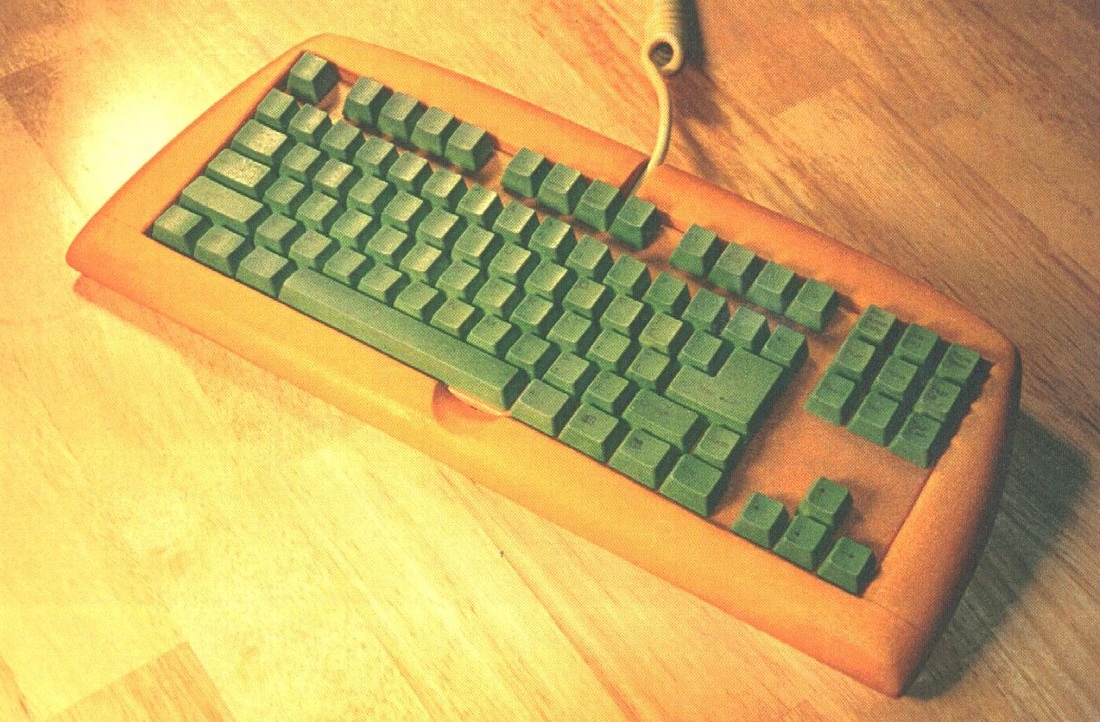
COMPOSTABLE KEYBOARD
Jason Iverson, Shayan Rafie This wonderful student project envisions new colorful materials made from plant fibers, like carrots and celery, which are left over from making juices at health bars. Their goal is to make compostable housings for computer hardware. With technology changing so rapidly there is a problem with recycling old computers and computer peripherals. These new materials would make the problem of recycling old computers much easier! |